To follow up my previous blogpost i'd like to show some existing, successful endlines that I looked at which helped me work towards Chase the Taste, and where they fit into the the four models of:
1. What we are
2. What we believe
3. What we offer
4. What we do for you
I started with Nokia - "Connecting People" To me this seem to fit directly into model 3, Nokia are offering communication.
Thomas Cook - "Don't just book it, Thomas Cook it" For me this was a clear example of model 1, they're saying they're different.
Fairy Liquid - "I hardly ever buy Fairy Liquid" This endline, celebrating the long lasting power of the washing up liquid is one of my favourites of all time. It might even warrant the use of the word genius. This fits well into both 3 and 4, they're offering longevity of the product and saving the consumer money.
Cadbury's - "A glass and a half full" This is another 3, offering both positivity with the use of 'half full' and to some extent health, with the insinuation of a glass and a half of milk.
L'Oreal - "Because you're worth it" Definitely a 4, they're promising to help you fulfill your potential.
Bisto - "Ah, Bisto" Again a 4, suggesting that you'll gain enjoyment from buying/eating it.
Bounty (The kitchen towels, not the chocolate) - "The quicker picker upper" A 3, offering absorbency. Good use of rhyme and neology.
KFC - "Finger licking good" / "So good" Again a 3, promising tasty food, however the coining of the new endline "So good" also fits into 1 as it came at a time where KFC made their food better for you than before.
Heinz - "Beanz Meanz Heinz" Another great use of neology and rhyme this endline fits into 1, telling the consumer that Heinz are the first port of call when it comes to Beanz.
Audi - "Vorsprung Durch Technik" An offer of german engineering puts this into 3. This also demonstrates the importance of research as this phrase was found in an Audi factory by Hegarty on an advert from 1971, who rebooted it in 1983.
It's brief and informative, well worth a read if you're in the same position as me as a copywriter or just generally interested in that kind of thing.
It was pointed out to me that "the main points are:
Before you come up with an endline you must be able to summarise what you want to say in 1 word, e.g. ‘explosion’
Rhymes, alliteration and neology are useful and often effective techniques.
Find relevant words with double meaning
The models commonly used for endlines are these
What we are e.g. a mobile phone brand
What we believe e.g. that communication is essential
What we offer e.g. stylish, advanced phones
What we do for you e.g. make you look cool"
When approaching these 4 models explicitly with the brand/product i'm focusing on I realised i'd already thought about them to some extent subconsciously, and it's pretty straight forward.
1. What we are - A confectionary brand.
2. What we believe - Flavour is important.
3. What we offer - Tasty, real fruit sweets.
4. What we do for you - Supply an enjoyable treat.
These 4 points made it clear that I already had the '1 word' to summarise what I was trying to say, Flavour. With this in mind and after a bit of brainstorming and a lot of binned paper I instigated the "Zingy language" suggested in the scampblog post above. Rhyme is a great tool in advertising and I was eager to use it.
Trial and error led me down various paths, some more fruitful (or should I say less infuriating) than others. I can't stress enough how useful trial and error is, in my own (short) experience of the industry I've come to see very early on not to stop at your first good idea, there are better ones yet to be seen.
The campaign so far for the product in question had a lot of focus around a race/hunt and so I tried to bring this in as much as possible.
After a few ideas I settles on "The Juice is Loose", only to discover after some quick research that this was in fact an endline run by Starburst in the '90s.
Here's one of those ads:
This is a good example of why you should always check that sort of thing, there's nothing wrong with taking inspiration, in fact you should take inspiration from everything possible, but nobody likes a plagiarist. It is, however, annoying to come up with something yourself only to discover someone else has already done it.
I'd tried and i'd made an error, so it was back to trying! After a few more ideas, including "Join the Fruit Pursuit" which just seemed a tad too forced to me, I again settled on another idea.
"Taste the Chase" - I was happy with it but went for a second opinion from the art director i'm working with (who can be found at http://thereisnoboxgt.blogspot.com) who instantly suggested swapping the words around, and so the endline had been decided.
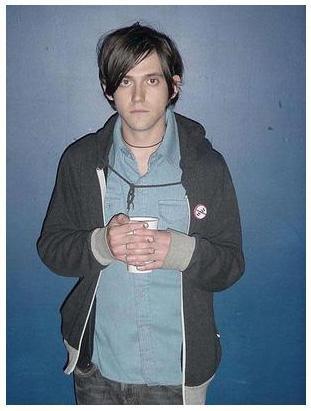
In this case study i’ll be looking at the life and works of the lyricist Conor Oberst, most famous for his position as singer/songwriter of the band Bright Eyes. Born on February 15th 1980, Conor has seen his fair share of music projects. In 1994 his first band was formed, originally called Norman Bailer but later reborn under the alias The Faint. Within a few days of this formation Conor announced to his totally unexperienced, songless band that they had a gig in two weeks time. I can imagine the band’s reaction as something along the lines of “Dude, what?” but in what must of have been a long, rehearsal-filled 14 days, 9 songs were written in time for their first performance. As much of an impressive feat as it may be, the quality of the music created at this point is questionable. Judge for yourself with this performance of ‘Willow Wood’ (one for the Lo-Fi fans) but I’m sure you’ll agree that ‘unpolished’ might be an understatement.
Luckily over the years both his skills in writing and performance improved dramatically. Conor was part of many musical ventures, namely Los Desaparecidos, Conor Oberst and the Mystic Valley band, most famously Bright Eyes and most recently in the Folk Rock superband Monsters of Folk.
As for his actual writing, I’m drawn more to the lyrics of the Bright Eyes songs, which are extremely introspective. Although not usually the sort of music I listen to that regularly Bright Eyes unique folk rock sound really appeals to me. I love the way he is able to tell an entire story, creating scenarios and imagery in my head through his use of words.Bright Eyes gained the recognition they deserve when the album ‘I’m Wide Awake, It’s Morning’ was voted one of the top 10 albums of 2005 by Time Magazine, and subsequently in 2007 when the song ‘Four Winds’ was named a top 100 song in Rolling Stone. ‘Four Winds’ is definitely evidence of the huge jump in talent from his earlier years and one of my favourites.
In my eyes Conor’s masterpiece is the song ‘At the Bottom of Everything’ from the album ‘I’m Wide Awake, it’s Morning’, plus the video’s pretty cool, I particularly think the embraces at the end are a nice touch.
I’m sure the lyrics can be interpreted in any number of ways, but to me it takes the view of existentialism. The ‘existential attitude’ is one that grows from a general feeling of disorientation in the world around you, a world which seems to lack meaning, but the lyrics portray this, to me at least, as something to be embraced. The final verse in particular gives this impression;
Oh my morning's coming back
The whole world's waking up
All the city buses swimming past
I'm happy just because
I found out I am really no one
The song hints at the inevitability of death as well as the fear of it which the majority of people feel, however lines such as ‘I’m happy just because, I found out I am really no one’ insinuates that although you can be aware of this inevitability, it doesn’t mean you should focus on it. If you’re under the impression that you are insignificant and the world appears to lack meaning, don’t just accept your insignificance, revel in it. Live your life and be happy as yourself, even if you feel like ‘no one’. I accept that I may have read way too far into it, and the lines themselves may have been insignificant (in which case, what better reason is there to praise them?) but if Conor Oberst is as deep a thinker as he genuinely seems to be then I’m sure a lot of his lines could be picked apart for hours into their meaning. And besides, one of the great things about music like his is that it can mean whatever you feel.
I was treated to the surprise of hearing this song live when I was lucky enough to see Monsters of Folk perform. Towards the end of the set Conor stepped up and started belting it out and it really was a great moment. In truth I had ingested copious amounts of overpriced beer and was in a pretty good mood already but nonetheless the performance was awesome. One thing I would note from the whole show was when Conor basically had a tantrum which included the deconstruction of the drums, using his limbs as tools, whilst the drummer, Will Johnson of Texas indie-rock band Centro-Matic, tried his hardest to finish the set. This tantrum ended in what must be the quintessential epitomy of Folk rock ‘n’ roll, the total annihilation of a piano. He came across as a bit of a diva (even if it was kinda cool), but i’m sure he’d just say he’s misunderstood.
Not the most imposing figure, Oberst has the frame of a debatably malnourished teenager and inspired a conversation which I overheard from an equally inebriated fan nearby culminating in the awe-inspiring question “And anyway, Where the f**k did he get a suit that nice that fits a child?”. Conor however is well equipped at handling hecklers, he famously retorted to a crowd member in New Hampshire in 2005 who decided to attack his alcoholism. A shout of “Don’t play, just drink” from the audience member was quickly shot down with the words “Don’t listen, just leave.”
Although he could easily come across as a whiney man who might need to let go of his teenage angst, which may be true, I do genuinely believe he is an underrated songwriter. Although Genius may not be the right word, (even if it is close) Conor Oberst certainly fits the tortured soul and frail physique stereotype of a man who has the ability to go down in history as one of this era's greats.
As Alley Cats and Hound Dogs aren’t yet available we can only presume that they taste like percy pigs, a similar sweet and brand leader. For this reason we tracked our thoughts whilst devouring these ‘soft gums’.
Percy Pigs
These are described as “Fruit Flavoured” on the packaging. The word fruit is extremely vague, it’s like ordering ‘Meat and Chips’ and hoping for the best. When looking further and at the ingredients you discover that the actual fruits are:
“Elderberry, Grape, Blackcurrant, Raspberry, Strawberry and Cherry”.
When looking at a single Percy Pig it’s split into two sections, (three if you count the ears separately, but let’s not) The face and the ears.
The ears are flavoured with real fruit juices, much like the Cats and Dogs will be.
When it came to eating the pigs, the fun part, we noticed that they actually have quite a sickly aspect to them, and although being desperately more-ish, we did feel a bit ill after eating a large amount of them.
It became increasingly clear that the face area of the pigs were suspiciously bland with the majority of the flavour resting in the ears, with the real fruit juice.
The tastiest and presumably healthiest part of the pig is the part with the real fruit juice, something to think about for the Cats and Dogs.
Penny Pigs
Percy’s female counterpart is “Lemon Flavoured”, more specific and comforting than merely ‘fruit’, you know what you’re getting.
Penny’s face is still lacking in flavour but overall is stronger tasting than Percy, particularly in the ears. Penny Pigs attain a certain sharpness that’s reminiscent of Lemon drizzle cake/slices and sherbet lemons, it’s a very specific flavour and carries a sense of nostalgia.
Again the real fruit juice filled ears were the tastiest section.
Packaging
The packaging of both products is very similar to some of Gratterpalm’s work, particularly their work for M&S. It’s important to note at this point that Percy/Penny Pigs are owned by M&S.
A very simple packaging design that will appeal to children.
Another good advert, it's simplicity is it's charm. Aired in August 2009, a month after the wimbledon tournament, it played off tennis being strong in people's minds. This adverts works so well as it relates so strongly to it's target audience, anyone with a job. Also at the time of release the recession was already in full swing so people were working harder than ever to keep themselves afloat. This advert pledges to give you the rest you need, in the form of a Kit Kat. The look on the man's face sums up the feelings of a large percentage of the nation. Tired, bored and just generally pissed off with the way things are going. The humour in this advert appeals to me and again there's no one thing I can pinpoint that brings it down.
This advert is great. It's irrelevance is what makes it relevant. Everything about this advert should stop it from working but that's exactly why it works. The concept of a Gorilla doing a drum solo in any context or situation is fantastic to me anyway and the song they chose (In the air tonight - Phil Collins) is perfect. When approaching this advert, the agency Fallon London proposed to produce "entertainment pieces" instead of using conventional advertising techniques, quite a large risk but one that paid off well. I can't really say a bad word about this ad, it's well produced, well thought out and brilliantly ridiculous.
The target audience for this ad seems to be pretty wide, covering people of pretty much any age range. Taking the advert on a literal level, children loved it and when stepping back purely to admire the absurdity, adults loved it too.
The ad was well received with 20% more people "looking favourably" on Cadbury's.
The Gorilla advert has gained almost a cult following, even having parody ads made like this one from Wonderbra: